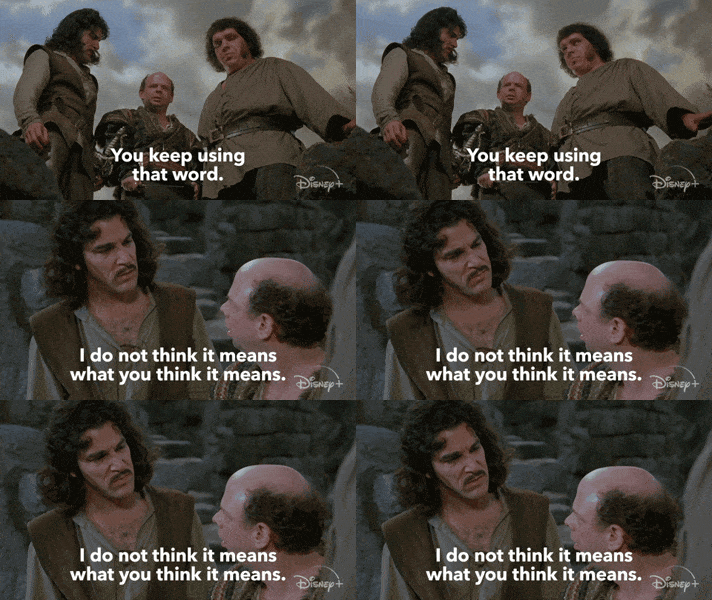
I do not think it means what you think it means...
Fifteen years ago, my parent's much-loved boxer, Mazoo, died.
We had just returned from a year in Nairobi and were living with my parents at the time. So Mazoo's death felt wrenching and immediate. For Ada, my then-three year old daughter, the loss was a hard one.

I comforted her - talking about how our love for this very good dog would go on and how death was a part of life. Because, in the end, we all die someday.
Fast forward a few weeks. It was a Friday night as I tucked Ada into bed.
"What will we do this weekend?" she asked.
I told her about a park play date and how, on Sunday, we would go to church and then take naps.
She was unsatisfied, "But what are we going to do on Sunday?"
I repeated our straightforward itinerary again (perhaps adding in some snacks/what we would have for dinner), but Ada would have none of it.
Her agitation only grew. Again and again she asked about Sunday - what would we do?!?!
After a few minutes, I realized the substantial misunderstanding.
I'd been telling her "we all will die someday"
And she'd been hearing, "we all will die Sunday"
What was, for me, a pedestrian afternoon was, in her mind, the last day on earth...and she couldn't figure out why I was so nonplussed!
When things go sideways
You've probably experienced this dynamic in life and at work. A seemingly straight-forward conversation that ends up with someone thinking something that is entirely different than you intended.
Which reminds me to the scene from The Princess Bride that gives this newsletter it's title.
Here are a few practical tips to help you communicate with clarity and care.
1). Consider the emption/context
What might the other person going through right now? The same message lands very differently depending on timing, stress, power dynamics, and lived experience.
Before you begin the conversation, try asking yourself,
What pressure might they be under right now?
What do they need most: clarity, reassurance, autonomy, or direction?
When in doubt, ask: Is now a good time for this conversation?
2). Start with your intention
This helps to lower defensiveness and get both people into alignment.
It can sound like this –
My goal, in this conversation, is to make sure that you have the tools that you need to finish this project
I want to address (name problem here), not assign blame
3). Slow down your pace – especially for hard conversations
Are you talking about something that is emotionally fraught or complicated? When emotions rise, it can be hard to process information.
Try slowing down your pacing, allow a bit more space between topics and use intentional pauses.
4). Check for understanding
This would have made a world of difference in my conversation with Ada vis-a-vis Sundays.
Ask –
Does this make sense?
What are you taking away?
What questions does this bring up?
5). Make repairs (when necessary)
When you realize that your message didn’t land (and it happens to the best of us!), make repairs.
It can sound like this,
I realize that didn’t land the way I intended.
Let me try that again, I didn’t do a good job communicating _______
Articles worth reading
How to Fire Someone with Compassion - by Joel Peterson
Many times, I hear people ask how they can balance empathy with accountability. When I answer, I note that you can be empathetic all the way up to when you fire someone.
This 2020 Harvard Business Review article gives really actionable advice on how to do just that. I wish I read it before I had to do my first firing about a decade ago, it would have helped me avoid some common pitfalls!